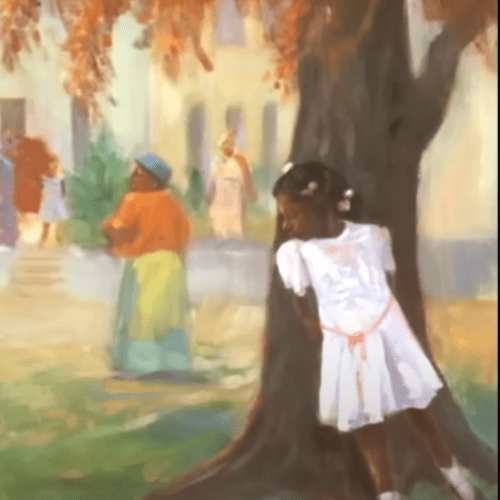
White Socks Only
Country: USA
Author: Evelyn Coleman
Illustrator: Tyrone Geter
Ages: 8–10
Publisher: Albert Whitman & Company
Story Source: Storyline Online
Lesson Plan
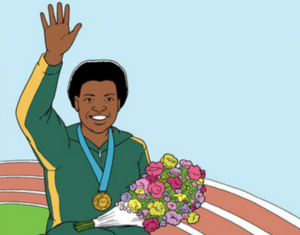
- This lesson introduces students to disability inclusion, resilience, and sportsmanship.
- Zanele’s story becomes a platform for encouraging empathy, ambition, and self-worth.
Activities
- How can we use our own actions to challenge unfairness, even in small ways?
- What can we do in our schools or communities to make sure everyone feels welcome?
- Why is it important to stand with others when they are treated unfairly?

Story Discussion Guide
Before reading
- Why was the girl told she couldn’t drink from the fountain?
- What did “Whites Only” really mean, and why was it unfair?
- How does the girl’s misunderstanding of “white socks” show the silliness of prejudice?

During reading
- What do you think the townspeople learned from the girl’s actions?
- How could her innocence and courage change the way others thought about segregation?
- How would the story be different if everyone had stood up together from the beginning?

After reading
- What examples in the story show people being judged for things they cannot control?
- Have you ever seen someone treated unfairly because of how they looked?
- How did it make you feel?
- What are some ways we can stop judging people based on appearances?

Comments
There are no comments
Leave a Reply
You must be logged in to post a comment.

Sign up to receive notifications whenever we
release new books
Share this post