


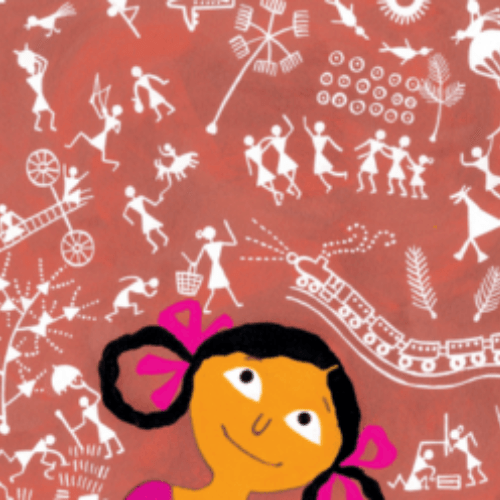
Dancing On Walls
Country: India
Ages: 5-8
Author: Shamim Padamsee
Publisher: Tulika Books
Illustrator: Uma Krishnaswamy
Lesson Plan
- This lesson explores the intersection of tribal storytelling, cultural art forms, and basic science concepts using a playful and engaging folktale.
Activities
- Moon and Earth Science Talk: Discuss gravity, air, water, and life on the moon. If moon people existed, why will they not know how to swim?
- Create Your Own Warli Wall: Children draw their own Warli-style images using simple shapes to depict everyday life.
- Tribal Art Around the World: Explore other forms of folk and tribal art (Aboriginal, San, Native American, Madhubani, Patachitra, etc.) and how they tell stories.
- Fantasy Meets Science Poster: Draw or write about what moon visitors might love about Earth and what they’d be surprised by.
- Dance of Gratitude: Learn a simple tribal dance.

Story Discussion Guide
Before reading
- What do you know about the moon? Do you think anything grows or lives there?
- Have you ever seen pictures of tribal or folk art? What did they depict?

During reading
- Why did Shirvi want to surprise her parents?
- Who were the moon visitors? What did they like about Earth?
- What happened when one of them fell into the river?

After reading
- Why do you think the moon beings left patterns on the wall?
- Can stories be a way of explaining art or science?
- What do you think the story tells us about imagination?

Comments
Leave a Reply
You must be logged in to post a comment.

Sign up to receive notifications whenever we
release new books
Share this post
The students had a wonderful time listening to the story. They had previously learned about Worli art in our last unit, so reading this book was very enjoyable for them. They used their imagination to think that the little stick figures could be aliens or special people from the moon. They also related it to the learner profile attributes of caring. After the story, they did a character analysis of the main character and engaged in a VTR learning of See Think Wonder.
Good Read