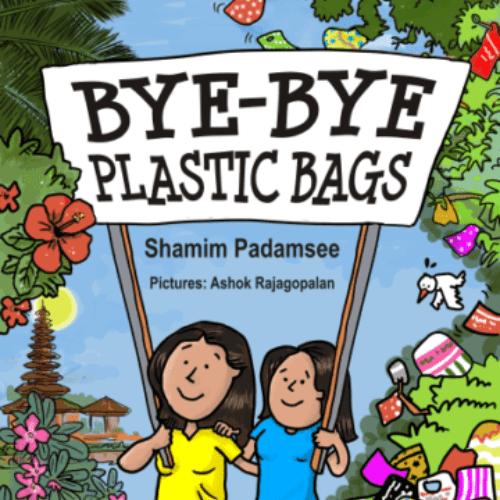
Meet the Wijsen sisters from Bali who turned their passion into a movement—and helped ban plastic bags in Indonesia.
Bye-Bye Plastic Bags
Average Rating: 0.0
Country: Indonesia
Ages: 8-10
Author: Shamim Padamsee
Publisher: Zamasama Original
Illustrator: Ashok Rajagopalan

About The Story

Plastic pollution has a harmful impact on our environment—it endangers marine and human health and clogs waterways. Plastics don’t disappear; they persist in the ecosystem for centuries. Scientists estimate that over half the world’s sea turtles and nearly every seabird have eaten plastic. Melati and Isabel Wijsen were just school-aged children when they decided to act. Upset by the rising plastic waste swamping their beloved island of Bali, they launched a movement: Bye-Bye Plastic Bags. Inspired by great leaders, like Nelson Mandela and Mahatma Gandhi, despite facing many hurdles, they sisters persisted—until finally, plastic bags were banned across the island. Their story is a beacon of hope for youth-led climate action, showing that big change can start with small, determined voices.

Themes

Environment & Conservation
On Land & in Seas

Sub Themes

Plastic Pollution
Activism
Youth Leadership

Parent-Teacher Guide

Learning Outcome

  • Understand the scale and consequences of plastic pollution.
  • Learn how youth-led action can influence government and policy.
  • Explore how change can come from caring, organizing, and persistence.
  • Reflect on global movements led by children like themselves to protect their environment.

Lesson Plan

  • This story is a compelling gateway into climate activism and marine conservation.
  • Students will explore how plastic use affects the waterways - oceans, rivers and lakes.
  • Show how children can organize campaigns to manage plastic waste.
  • Melati and Isabel's real-life success inspires learners to envision their own impact.
Activities

  • Plastic-Free Audit: Track plastic use at home/school for a day and find alternatives.
  • Poster Design: Create advocacy posters calling for reduced plastic use.
  • Local Clean-Up: Organize a beach, park, school, or a neighborhood clean-up.
  • Compare Campaigns: Research similar youth movements around the world and how they succeeded.
Story Discussion Guide

Before reading

  • Where do you see plastic in your daily life?
  • What do you know about plastic waste in rivers, lakes, and oceans?

During reading

  • What made the sisters start their campaign?
  • What challenges did they face and how did they respond?
  • How did their actions begin to spread beyond Bali?

After reading

  • What plastic items could we stop using right away?
  • What makes youth-led movements powerful?
  • What’s one environmental problem you would like to help solve?

Applicable Sustainable Development Goals

SDG 12 – Responsible Consumption and Production

Demonstrates sustainable waste practices and advocacy for responsible consumption.

SDG 13 – Climate Action

Highlights youth as climate leaders advocating for environmental justice.

SDG 14 – Life Below Water

Tackles marine plastic pollution, a growing threat to life below water.

Comments

Comments

  • BYE-BYE Plastic should become a must-read for schools and climate enthusiasts. A powerful, relevant, and factual account written lucidly with appropriate illustrations.

    Well-done Zamasama!

    soniya Mawani

Leave a Reply

Sign up to receive notifications whenever we
release new books

Share this post
Start typing and press Enter to search

Shopping Cart
Sign up with Google