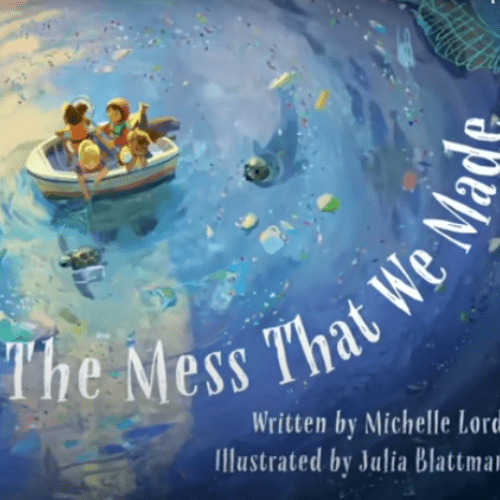
Illustration of ocean wildlife swimming among plastic debris, with children cleaning the beach.
The Mess that We Made
Average Rating: 0.0
Country: USA
Author: Michelle Lord
Illustrator: Katherine Blattman
Ages: 5-8,8-10
Publisher: Flashlight Press
Story Source: Storyline Online
About The Story

"The Mess That We Made" is a lyrical, rhythmic picture book that shows how everyday human actions—like tossing plastic away—can lead to ocean pollution. We see the journey of trash from landfills and beaches drifting into the sea, harming marine animals and upsetting delicate ecosystems. But this cautionary tale also brings a message of hope. Through simple actions like reducing single-use plastics, reusing items, and recycling, (the 3 R’s) we can all help clean up the mess. Every small decision adds up. This powerful call to action empowers even the youngest readers to make a difference.

Themes

Environment & Conservation
On Land & in Seas

Sub Themes

Ocean pollution
Environmental responsibility
destruction of Marine Life

Parent-Teacher Guide

Learning Outcome

  • Children will become more conscious of their daily plastic use and recognize the power of their choices. They’ll feel capable of being part of the solution to ocean pollution. Students will be able to explain the 3 R’s and how they help reduce ocean waste.
  • Understand the link between wasteful human behavior and ocean pollution.
  • Learn how small individual actions can create global environmental impact.
  • Gain vocabulary around ocean health and sustainability.
  • Feel empowered to make better choices about waste.

Activities

  • 1. Plastic Hunt: Ask children to find plastic items at home/school and sort which ones can be reused or recycled.
  • 2. Verse Writing: Let students create their own short poem about caring for nature.
  • 3. Ocean Poster: Create awareness posters about protecting marine life.
  • 4. 3 R’s Poster Challenge: Students design a poster showing how they can Reduce, Reuse, and Recycle in their daily lives. Display them around school during Earth Week or Environment Day.
Story Discussion Guide

Before reading

  • What do you know about oceans?
  • Have you ever seen litter on a beach or near water?
  • Have you heard of the 3 R’s? What do they mean?

During reading

  • How does the trash get into the ocean?
  • What do the sea animals feel or do?
  • When do things start to change in the story?

After reading

  • What is one thing you can do at home to reduce plastic?
  • What part of the story made you feel hopeful?
  • Who else can help clean up the mess?

Applicable Sustainable Development Goals

SDG 12 — Responsible Consumption and Production

Encourages more thoughtful consumption and better waste disposal.

SDG 13 — Climate Action

Tackling plastic pollution is part of climate-related environmental action.

SDG 14 — Life Below Water

The story directly shows how plastic pollution threatens ocean ecosystems and marine life.

Comments

There are no comments

Leave a Reply

Sign up to receive notifications whenever we
release new books

Share this post
Start typing and press Enter to search

Shopping Cart
Sign up with Google