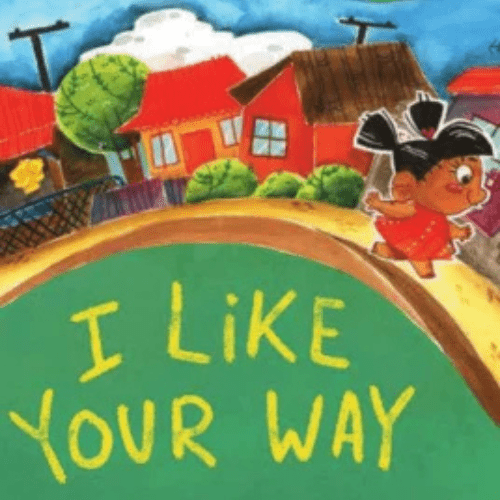
A smiling blind boy walking confidently near a satay stall
I Like Your Way
I Like Your Way
Average Rating: 0.0
Country: Indonesia
Author: Aku Suka Caramu
Illustrator: Haikal
Ages: 5-8
Publisher: Room to Read
Story Source: Literacy cloud

About The Story

Children who are blind often develop a heightened awareness of their other senses, enabling them to navigate the world in extraordinary ways. This story illustrates the remarkable resourcefulness of a blind child as he confidently finds his way to a friend’s house, guided by his finely tuned sense of touch, smell, and hearing. His sister, initially worried about his journey, is amazed to see how he instinctively knows when to turn a corner by recognizing the aroma of the satay stall and the texture of the stone wall. This tale celebrates resilience, adaptability, and the boundless potential of every child to rise above challenges with courage and capability.

Themes

Family & Friends
STEAM
Inclusion & Disability
SEL

Sub Themes

Parent-Teacher Guide

Learning Outcome

  • Understand how visually impaired individuals navigate the world using other senses.
  • Appreciate the value of resilience and resourcefulness in overcoming challenges.
  • Reflect on the importance of inclusion and empathy.
  • Learn to celebrate differences and capabilities in others.

Lesson Plan

  • This story helps children understand and appreciate different abilities and encourages inclusive thinking and empathy through observation and discussion.
Activities

  • Senses Chart: Identify sounds, smells, and textures around them and write what each sense tells them.
  • Empathy Circle: Share a moment when they had to do something difficult and how they felt encouraged.
  • Mystery Box Challenge: Prepare a box filled with objects that have distinct textures, shapes, smells, or sounds (e.g., garlic pod, bell, sponge). Blindfolded children take turns reaching into the box and identifying items using their senses.

Story Discussion Guide

Before reading

  • What are the different senses we use every day?
  • Have you ever tried finding your way in the dark?

During reading

  • How does the boy know where to go without seeing?
  • What sounds and smells help him along his journey?

After reading

  • What do you think it feels like to be blind?
  • How did the sister’s view change by the end of the story?
  • What can we do to help a friend who sees the world differently?

Applicable Sustainable Development Goals

SDG 4 – Quality Education

SDG 4 promotes accessible education for all children, including those with visual impairments.

SDG 10 – Reduced Inequalities

SDG 10 encourages inclusive societies that reduce barriers and promote equity for people with disabilities.

Comments

There are no comments

Leave a Reply

Sign up to receive notifications whenever we
release new books

Share this post
Start typing and press Enter to search

Shopping Cart
Sign up with Google